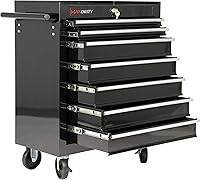
Tool Chest on Casters: What to Know Before You Buy
Choose a tool chest on casters for drawer storage you can roll around a garage or workshop. Pick a cabinet for frequent tool access, or a rolling box system for tools that travel between projects.
On this page (7 sections)
- What should you check on a tool chest with casters?
- How much room does a caster tool chest need?
- Which storage format suits your tools?
- What helps keep a rolling chest in place?
- How should you set up and care for a rolling chest?
- What should you check before rolling a loaded chest?
- Which tool chest on casters should you choose?
A tool chest on casters is a good choice when you want organized drawers that move from a garage wall to your work area. Choose a cabinet for tools you reach for often, or a rolling box system for grouped tools that travel between projects.
The main buying decision is how you'll move and access the tools. A cabinet that rolls a few feet across concrete serves a different job from a tower you take outside or load into a vehicle.
What should you check on a tool chest with casters?
Check storage layout, wheel brakes, drawer restraints, and usable space before choosing a chest. Start with your tools and daily routine, then decide which features solve a real need.
Shallow drawers help you see sockets, pliers, and screwdrivers without digging. Deeper compartments suit bulky tools, but small parts need trays or containers so they don't settle beneath larger items.
Wheel brakes hold the cabinet in its parking position, while a locking bar keeps drawers or doors closed during movement. Neither feature replaces careful loading or makes the chest tip-proof.
For a wider view of the available formats, start with our guide to rolling tool chests and tool boxes.
How much room does a caster tool chest need?
Allow for the closed cabinet, fully opened storage, and room to stand and turn. A chest that fits against a wall can still be awkward to use beside a parked car.
Measure your narrowest doorway and the tightest corner on the route. Include handles and side racks, and check whether an open drawer would block a walkway.
The Goplus measures 23.5 in long x 11 in wide x 40 in high. The Tuffiom measures 23 in wide x 11 in deep x 40 in high.
The Craftsman workstation measures 21.5 in long x 16.2 in wide x 28.8 in high. The VERSASTACK XL tower measures 22.11 in long x 17.98 in wide x 33.3 in high.
Use painter's tape to mark the storage footprint on the floor before ordering. For a workstation that extends outward, also plan space for its open position.
Compare your measurements with our guide to tool chest sizes for a home garage. Then account for the tools themselves with our guide to how heavy a rolling tool chest can get when loaded.
Which storage format suits your tools?
Choose drawers for frequent access and separate boxes for tools you carry as project kits. These 4 options serve different routines, even though all have wheels.
Goplus tool chest on casters for garage hand tools
The Goplus suits a home garage where small hand tools need separate drawers and a few larger items need lower storage. Its 5 drawers and 2 trays give you several places to sort tools without putting everything into one deep bin.
The lower shelf adjusts or comes out, while door hooks and 6 holes in the side handle provide extra tool storage. EVA drawer liners cushion tools and help protect the drawer interiors.
Choose it if you'll use the removable top box at a nearby bench and return it to the cabinet afterward. Skip this format if your main need is carrying large power tools between locations or crossing uneven ground.
The main unit comes preassembled, with wheels and racks among the parts you attach. Finish that assembly before loading tools.
Craftsman workstation for tools used together
The Craftsman 22-Inch Rolling Tool Box suits repair kits that combine larger tools, hand tools, and accessories. Its 4 storage compartments open into a multi-level workstation, making it useful when you want several groups of tools visible together.
Ball-bearing slides support opening, and the reinforced metal telescopic handle lowers for storage. The maximum recommended load is 88 lb; plan the kit around that limit rather than filling every available space.
Pick this format if you want to roll a complete kit to the job and open it there. Skip it if you mainly want shallow drawers along a garage wall or need access while the unit remains in a tight parking spot.
Its water-repellent designation doesn't make it suitable for leaving tools exposed to rain.
Tuffiom cabinet for mixed garage storage
The Tuffiom suits a mix of small hand tools and taller items that need cabinet space. It combines 5 drawers with a bottom cabinet whose shelf adjusts or comes out.
A side rack holds small tools, and the detachable top chest has handles on both sides. You can store that top section inside the lower cabinet after removing the inner shelf.
Choose it if changing the lower storage layout matters more than building a connected box system. Skip it if you need to keep the bottom compartment full while also nesting the top chest there for transport.
The powder-coated steel surface can be wiped clean. Dry the cabinet after cleaning so moisture doesn't remain around seams or under stored tools.
Craftsman VERSASTACK XL for project kits
The VERSASTACK XL tower suits homeowners who divide tools by task and move them between work areas. Its 3 storage units connect with a drop-and-lock mechanism and separate with a one-touch release.
The package contains a suitcase, deep toolbox, rolling unit, and adaptor for connecting other VERSASTACK boxes. Craftsman describes the body as water and dust resistant, which suits outdoor projects better than open storage.
Choose it if separate project boxes will reduce repacking. Skip it if you repeatedly need small tools buried in a lower box, since reaching them can mean removing the units above.
For help planning a stack around access and carrying needs, see how to choose a modular rolling tool box system.
What helps keep a rolling chest in place?
Park on a level, firm surface, engage the brakes, and open only the storage you need. Brake hardware controls wheel movement; it doesn't stop an unbalanced cabinet from tipping.
The Goplus and Tuffiom each have 4 wheels, with brakes on 2, plus locking bars for drawers and cabinet doors. Keep the bars accessible so securing the chest becomes part of every move.
Store heavier tools low and spread their weight across the available storage. A deep drawer full of dense tools can shift a substantial load outward when opened.
Don't use an open drawer as a step or lean your weight on it. If the cabinet rocks or moves during normal access, close it and resolve the parking or assembly problem first.
How should you set up and care for a rolling chest?
Complete assembly and check the empty chest before adding tools. It's easier to correct a loose caster or poorly seated shelf while the storage is empty.
Follow the supplied instructions for attaching wheels, handles, and racks. Check fasteners, brake operation, drawer travel, and any removable sections before planning the load.
Group tools by task, with frequently used pieces easy to reach. Use our guide to how to organize a tool chest to plan drawer groups before adding dividers or foam.
Wipe dirt from tools before putting them away, and let wet tools dry. Periodically lift removable liners to check for trapped moisture or grit.
Clear hair, string, and debris from around the wheels, and inspect caster fasteners after frequent moves. Use only the maintenance products and lubrication points recommended in the chest's instructions.
What should you check before rolling a loaded chest?
Secure drawers, doors, and connected boxes, then inspect the full route. Close storage even for a short move across the garage.
Remove cords, loose screws, and floor debris before starting. Small wheels can stop abruptly at a joint or threshold, so don't assume a route is suitable because the empty chest crossed it.
Use the intended handle and move at a controlled pace. Don't pull by a drawer, force the chest over an obstruction, or use wheel brakes as a substitute for controlling movement.
Avoid confusing empty weight with carrying weight. If a top box needs lifting into a vehicle, plan its contents using our tool chest weight guide.
Which tool chest on casters should you choose?
Choose your tool chest on casters by access pattern and travel route. Buy for the way you'll retrieve tools on an ordinary workday.
Pick Goplus for drawer-based hand-tool storage with liners and extra hanging points. Pick Tuffiom when an adjustable lower cabinet and nesting top box fit your storage routine.
Choose the Craftsman workstation if you want several compartments open together at the job. Choose VERSASTACK XL if separate, connected project kits will make moving and packing easier.
Before ordering, confirm that your longest tool fits the intended compartment and that your route suits the loaded unit. Use the rolling tool chest guide if you're still deciding between a garage cabinet and portable boxes.
Frequently asked questions
Are tool chests on casters easy to move?
A tool chest on casters is easier to reposition on a smooth, level floor than across rough ground; the effort depends on its loaded weight, wheel size, and floor condition. Clear the route first, secure the drawers, and use the handle and movement method described in the chest's instructions.
Should all casters on a tool chest have brakes?
Not every caster needs its own brake, but the brake arrangement must suit the cabinet and its intended use; the Goplus and Tuffiom models here each have brakes on 2 wheels. Park on a level surface, engage the brakes, and remember that brakes control rolling rather than prevent tipping.
How much space should I leave around a rolling tool chest?
Leave room to open drawers and doors fully, stand in front of them, and turn the chest along its route; there is no single clearance that fits every layout. Measure the overall cabinet, including handles and racks, then check nearby vehicles, benches, doorways, and other obstacles.
Can I roll a tool chest with its drawers open?
Close every drawer and cabinet door before rolling a tool chest, then engage any transport bar or latch as instructed; an open drawer shifts weight outward and can catch nearby objects. Keep heavier tools low, move at a controlled pace, and never use a drawer as a pulling handle.