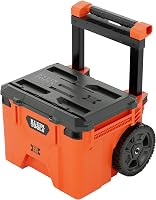
Milwaukee Packout Dimensions and Sizes
Milwaukee Packout dimensions in length x width x height are 22.1 x 18.9 x 25.6 in for the rolling box and 22.1 x 11.3 x 16.1 in for the large tool box. Both drawer organizers measure 22.2 x 16.3 x 14.3 in.
On this page (8 sections)
- What are the dimensions of Milwaukee Packout boxes?
- How much room does a Packout rolling tool box need?
- Which Packout drawer organizer suits your tools?
- When is the Packout large tool box the better choice?
- How should you measure for a Packout stack?
- How should you set up and care for Packout boxes?
- What mistakes should you avoid when choosing a Packout size?
- Which Milwaukee Packout dimensions fit your setup?
Milwaukee Packout dimensions vary by model, so match the exact box to your storage space and tools before choosing a stack. The rolling box needs the most height here, the drawer organizers share an outer size, and the large tool box has the narrowest stated width.
Outside size answers whether a box fits your shelf or vehicle. Usable interior space and opening clearance answer whether it works for your tools and daily routine.
What are the dimensions of Milwaukee Packout boxes?
These Milwaukee Packout dimensions are outside length x width x height. Use the table to compare storage footprints, then allow separate working room for opening and moving each box.
| Packout box | Length | Width | Height |
|---|---|---|---|
| Milwaukee Packout 22-Inch Rolling Tool Box | 22.1 in | 18.9 in | 25.6 in |
| Milwaukee Packout 3-Drawer Organizer Box | 22.2 in | 16.3 in | 14.3 in |
| Milwaukee Packout 4-Drawer Organizer Box | 22.2 in | 16.3 in | 14.3 in |
| Milwaukee Packout Large Tool Box | 22.1 in | 11.3 in | 16.1 in |
Keep those measurement labels attached when drawing a storage plan. If you rotate a box to fit a shelf, check where its lid, drawers, and handles will face.
Do Milwaukee Packout dimensions tell you what fits inside?
Outside dimensions do not establish usable interior space. Walls, trays, dividers, and drawer construction take up room, so a tool shorter than the box's outer length can still be too large inside.
Measure each bulky tool at its widest points, including any battery or attachment you plan to leave connected. For a close fit, confirm interior or drawer measurements before ordering.
How much room does a Packout rolling tool box need?
The rolling box needs room to park, tilt, roll, and open, beyond its basic storage footprint. It suits buyers moving tools between a vehicle and a work area more than those who leave everything under a fixed bench.
It weighs 23.4 lb empty and has an industrial-grade extension handle. Include that starting weight when deciding whether you can lift the loaded box into your vehicle.
Its impact-resistant polymer body and IP65-rated weather seal suit mobile tool storage, but weather protection doesn't make it a place to put wet tools away. Dry tools before closing the lid.
Choose it when wheels solve a regular carrying problem and one main compartment suits your larger gear. Skip it if you mainly need small-tool sorting or would lift it up stairs more often than roll it.
The interior organizer tray is optional, so plan how loose accessories will stay grouped. Separate small containers can prevent bits and fasteners from settling beneath larger tools.
Check door frames, vehicle openings, and the space needed to turn through corners. A box that passes straight through an opening may still be awkward to turn immediately beyond it.
For other wheeled storage styles, see our guide to rolling tool chests and tool boxes. For connecting and removing modules, follow how to separate and lock Milwaukee Packout boxes.
Which Packout drawer organizer suits your tools?
Choose the 3-drawer model for fewer tool groups or the 4-drawer model for more separate categories. Their matching outside dimensions make tool layout and access the key choices.
The 3-drawer organizer has metal ball rails and a locking safety bar. It suits someone who wants tools grouped by task without spreading a kit across too many drawers.
Plan groups such as measuring tools, fastening tools, and job-specific accessories. Skip this model if that sorting plan still leaves too many unrelated items sharing each drawer.
The 4-drawer organizer includes 4 sets of adjustable dividers, metal ball slides, and a lockable security bar. Its total load capacity is also 50 lb, so the extra drawer doesn't increase the allowed load.
Choose it for a kit with several distinct groups, such as sockets, drivers, pliers, and small accessories. Skip it if your main need is storage for bulky tools whose drawer fit you haven't confirmed.
Neither drawer count tells you the usable height of a particular drawer. Check your tallest tool and the room needed to grasp it, rather than assuming more or fewer drawers will solve the fit.
Leave clear space in front for drawer travel and your standing position. A drawer box tucked behind other gear loses much of its access advantage.
When is the Packout large tool box the better choice?
The large tool box is the better fit when you want top access with an included organizer tray and its narrower outer width helps your storage plan. It suits a mixed kit that you carry to a work area and open there.
It weighs 12.1 lb empty and has an IP65-rated weather seal. Its reinforced top handle provides a carry point, but plan around the full loaded weight.
Use the tray for small accessories you need near the top, with larger tools below. Check that the lower tools fit with the tray installed if you intend to use both spaces together.
Skip this box if you need frequent access while other modules remain above it. A top-opening box requires lid clearance, and boxes stacked on top must come off before you can open it.
How should you measure for a Packout stack?
Measure the storage spot, access route, and working space as separate checks. A stack can fit while parked yet be awkward to load, separate, or use.
- Measure the clear floor or shelf width and depth, including any lips or supports.
- Measure overhead clearance at the lowest obstruction, such as a shelf edge or vehicle opening.
- Add box heights for an initial plan, then check the connected stack's actual height.
- Measure the narrowest doorway, turn, and loading opening along the route.
- Allow room for lids, drawers, handles, and reaching the release points.
Mark the planned footprint with removable tape or cardboard before buying. Stand where you would use the boxes and check whether doors, nearby cabinets, or walkways would get blocked.
For a vehicle, measure both the opening and the space inside. Also consider the lifting angle, since a box that fits once flat may be difficult to get through the opening.
Shelf fit also depends on load support. Count the weight of every box and its contents, then compare that total with the shelf's capacity.
Our guide to how heavy a loaded tool chest can get explains why empty weight is only the starting point. The modular tool box system guide helps you plan the wider system.
How should you set up and care for Packout boxes?
Set up each box around how often you reach for its contents, then keep closures and connecting surfaces clear. Start with a layout you can change as your kit grows.
Group tools by task before placing dividers. Leave enough space to lift tools out without removing several unrelated items first.
Put dense items low in a stack and keep the load balanced. Open one drawer at a time on a stable, level surface, and secure drawers and lids before moving the setup.
Brush loose grit away from connecting areas and wipe dirt from seals and latch contact points. Don't force a connection or closure when a tool, cable, or debris is in the way.
Let damp tools dry before storage and avoid leaving loose metal parts against seals. For a practical sorting plan, use our guide to organizing a tool chest.
What mistakes should you avoid when choosing a Packout size?
The biggest mistake is buying for outside fit without checking access and tool fit. Avoid these planning errors before committing to a layout.
- Using “22-inch” as a complete measurement. Compare all 3 dimensions for the exact model.
- Treating box height totals as a final stack measurement. Verify the connected setup before relying on tight overhead clearance.
- Assuming drawer capacity applies to each drawer. The stated capacity is for the organizer as a whole.
- Filling every available gap. Leave room to grasp tools and return them without rearranging the box.
- Choosing the whole stack at once. Start with the module that solves your main storage problem, then add space for a clear purpose.
If the measurements or access style don't suit your workspace, compare Milwaukee Packout alternatives before building around an awkward fit.
Which Milwaukee Packout dimensions fit your setup?
Choose the rolling box for regular movement, the large tool box for a carried kit with a tray, and a drawer organizer for frequent access to sorted tools. Between the drawer models, choose the number of groups you need after confirming individual tool fit.
Your final Milwaukee Packout dimensions check should cover the loaded box, the route it travels, and the space needed to open it. If all 3 work, you're choosing a useful setup rather than simply filling a storage gap.
For more options built around connected storage, browse our guide to best stackable tool boxes.
Frequently asked questions
What are the dimensions of the Milwaukee Packout rolling tool box?
The Milwaukee Packout 22-Inch Rolling Tool Box measures 22.1 in long, 18.9 in wide, and 25.6 in high. Use those outside dimensions to plan storage, then check handle position, wheel clearance, and room to open the lid before relying on a close fit.
Are Milwaukee Packout 3-drawer and 4-drawer boxes the same size?
Yes, both organizer boxes measure 22.2 x 16.3 x 14.3 in overall, and each has a total capacity of 50 lb. Choose by your sorting needs, then confirm usable drawer dimensions for your largest tools; matching outside measurements do not establish matching drawer space.
How do I measure space for a Packout stack?
Measure the storage footprint, overhead clearance, and narrowest opening along the route first. Add the individual box heights for an initial estimate, then measure the connected stack in its intended position, leaving working room for handles, latches, drawer travel, and removing boxes.
Does the rolling Packout box include an interior tray?
The rolling tool box does not include an interior organizer tray; trays are optional components. The Milwaukee Packout Large Tool Box includes a tray, making it worth considering for a mixed load of tools and small accessories when you want that extra sorting space included.