7 Best Rolling Tool Boxes (October 2026)
The best rolling tool boxes include the Keter Stack-N-Roll 3-Piece Rolling Tool Box for home project variety, the Milwaukee Packout 22-Inch Rolling Tool Box for Packout owners, and the Craftsman VERSASTACK XL 4-Piece Rolling Tower for bulky DIY kits.
On this page (9 sections)
- How we chose the best rolling tool boxes
- Which rolling tool box fits each job?
- Best rolling tool boxes reviewed
- How do you choose the right size, capacity and system?
- How much weather protection does a rolling tool box need?
- How should you set up a new rolling tool box?
- What mistakes make rolling tool storage harder to use?
- How do you care for the wheels, latches and storage cases?
- Which is the best rolling tool box for your next project?
The Keter Stack-N-Roll 3-Piece Rolling Tool Box is the best rolling tool box for most home projects because it separates tools and small parts in one connected set. Milwaukee suits Packout owners, while DeWalt and Klein serve buyers moving heavier kits.
Start with your work route and access needs. A box that rolls well but forces you to unload the whole stack for every screwdriver can be the wrong choice.
Our guide to modular rolling tool box systems explains system choices. Compare our best stackable tool boxes and Milwaukee Packout dimensions guide if you're planning a larger setup.
Our picks at a glance
-
1
 Best for home project variety
Keter Stack-N-Roll 3-Piece Rolling Tool Box
9.1/10 our score
See it on Amazon -
2
 Best for Packout owners
Milwaukee Packout 22-Inch Rolling Tool Box
9.0/10 our score
See it on Amazon -
3
 Best for bulky DIY kits
Craftsman VERSASTACK XL 4-Piece Rolling Tower
8.6/10 our score
See it on Amazon
- 4
 Check it
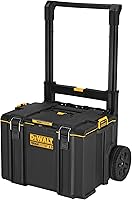
DeWalt ToughSystem 2.0 Mobile Storage
Best for heavy outdoor loads - 5
 Check it
Keter Stack-N-Roll 4-Piece Rolling Tool Box
Best for sheltered repair stations - 6
 Check it
Craftsman VERSASTACK 17-Inch Rolling Tool Box
Best for lighter repair kits - 7
 Best for rough work routesCheck it
How we chose the best rolling tool boxes
Storage layout, mobility and system fit matter more than the number of boxes alone. We compared included pieces, load limits, wheel designs, weather protection and compatibility to identify a clear buyer for each pick.
Complete sets rank well for home users starting from scratch. A single rolling base makes more sense when you already have matching cases or want to choose every added module yourself.
Our scores reflect those features and the needs of this roundup's reader. An existing system can make a lower-ranked option the better choice for you.
Which rolling tool box fits each job?
Choose a complete set for mixed home repairs or a single base for an existing system. Use the comparison to check what's included before comparing size and capacity.
Exterior measurements help with parking space and vehicle clearance. They do not tell you whether a long saw, bulky charger or fitted tool case will fit inside.
| Product | Best for | Included pieces | Dimensions | Capacity | Our score |
|---|---|---|---|---|---|
| Keter Stack-N-Roll 3-Piece Rolling Tool Box | home project variety | Cart, toolbox and parts organizer | 16.18 x 20.66 x 27.32 in | 165 lb | 9.1 |
| Milwaukee Packout 22-Inch Rolling Tool Box | Packout owners | 22.1 x 18.9 x 25.6 in | 9.0 | ||
| Craftsman VERSASTACK XL 4-Piece Rolling Tower | bulky DIY kits | 22.11 x 17.98 x 33.3 in | 8.6 | ||
| DeWalt ToughSystem 2.0 Mobile Storage | heavy outdoor loads | 38.81 x 19.89 x 23.79 in | 250 lb | 8.4 | |
| Keter Stack-N-Roll 4-Piece Rolling Tool Box | sheltered repair stations | Cart, 2-drawer toolbox and 2 parts organizers | 20.67 x 15.75 x 22.44 in | 8.2 | |
| Craftsman VERSASTACK 17-Inch Rolling Tool Box | lighter repair kits | 19.89 x 16.97 x 30.81 in | 8.0 | ||
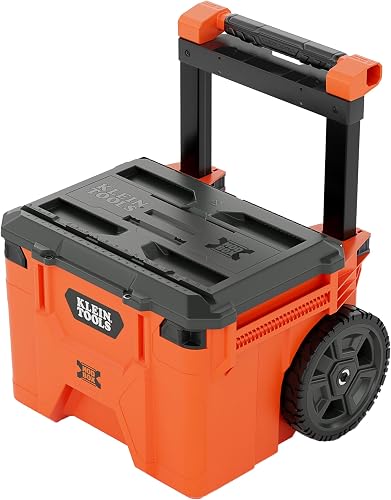
| Klein MODbox Rolling Tool Box | rough work routes | 22.7 x 20.7 x 27 in | 250 lb | 7.6 |
Best rolling tool boxes reviewed
Keter's 3-piece set is the most useful starting point for a general home kit. The other choices solve more specific needs, including frequent case changes, drawer access and heavier transport loads.
Keter Stack-N-Roll 3-Piece Rolling Tool Box
- Cart, toolbox and organizer
- Interlocking modular pieces
- 7 in wheels
- 165 lb capacity
A complete set for home repairs that need tools, accessories and fasteners together. Separate cases let you take the parts of the system each project needs.
Pros
- Three storage pieces included
- Transparent polycarbonate organizer lid
- Telescopic handle and side grips
Cons
- No drawer unit included
- Only one dedicated parts organizer
Choose the Keter 3-piece set if your projects mix power tools, hand tools and loose hardware. Its cart, toolbox and parts organizer let you group those items without buying separate cases first.
The transparent polycarbonate organizer lid helps you find fasteners before opening the case. Audible snap-close latches provide a closing cue, though you should still check that every latch is fully engaged before moving.
Its resin construction, metal telescopic handle and side grips suit a kit that moves between storage and the next repair. The 7 in wheels and 165 lb maximum weight recommendation give it a useful role as a home project carrier.
Pack larger tools low and keep the organizer ready for the screws, fittings or accessories needed that day. Detach the case you need instead of bringing the whole stack into a cramped room.
Skip it if drawers are your priority or you regularly need two separate hardware organizers. The Keter 4-piece set below offers both, with a different weather-protection tradeoff.
Milwaukee Packout 22-Inch Rolling Tool Box
- Compatible with Packout modular storage
- Industrial-grade extension handle
- 9 in all-terrain wheels
- Interior organizer tray sold separately
A rolling base for buyers who already use Packout cases or want to build within that system. Plan separate storage for small items because an interior tray is not included.
Pros
- Packout compatibility
- IP65 weather seal
- Metal-reinforced corners and locking point
Cons
- Interior organizer tray costs extra
- Single box rather than a complete storage tower
Choose the Milwaukee rolling box if Packout compatibility is the main requirement. It gives existing cases a rolling base while letting you keep the same system for future additions.
Its 9 in all-terrain wheels, industrial-grade extension handle and metal-reinforced corners suit routes beyond a smooth garage floor. An IP65 weather seal adds dust and water protection, provided the lid closes correctly.
The interior organizer tray is optional and is not included. Plan pouches, suitable organizers or the optional tray before filling the main compartment with small tools that could get buried.
At 23.4 lb empty, the box adds weight before the first tool goes in. Think through vehicle loading as carefully as rolling, especially if you lift your kit several times each day.
Skip it if you want a complete divided set immediately and have no reason to choose Packout. Our Milwaukee Packout vs DeWalt ToughSystem guide helps if you're choosing between those systems from scratch.
Craftsman VERSASTACK XL 4-Piece Rolling Tower
- Three storage units and adaptor
- Automatic stacking and one-touch release
- 7 in wheels
- Adaptor for other VERSASTACK boxes
Separate suitcase, deep toolbox and rolling units suit homeowners with tools of different sizes. The included adaptor connects the tower to other VERSASTACK system boxes.
Pros
- Three tool-storage units included
- Drop-and-lock connection with one-touch release
- Includes VERSASTACK adaptor
Cons
- 33.9 lb before tools are added
- Four-piece count includes an adaptor rather than four boxes
Choose the Craftsman XL tower for a varied DIY kit with bulky tools that benefit from separate cases. It includes a suitcase, deep toolbox, rolling unit and adaptor, so the four-piece count means three storage units.
Automatic stacking, a drop-and-lock connection and one-touch release suit work that involves splitting the tower into task groups. Put the day's repair tools in one unit and leave less-used gear in another.
The included adaptor connects other VERSASTACK system boxes. That makes this tower worth considering if you want the XL units alongside storage from that system.
Its assembled height is 33.3 in, and it weighs 33.9 lb before loading. Measure vehicle clearance and decide how you'll separate the units for lifting rather than assuming the whole tower should travel as one piece.
Skip it if most of your kit is small hand tools or you have little room above the parked tower. A simpler set can avoid carrying empty case space and extra shell weight.
DeWalt ToughSystem 2.0 Mobile Storage
- 8 in all-terrain wheels
- 250 lb load capacity
- IP65 dust and water resistance
- Auto-connect side latches
A single mobile box for heavier tool loads and routes with uneven ground. A removable tray provides small-item storage, and it connects with ToughSystem products.
Pros
- 250 lb load capacity
- Removable inner tray
- Backward compatible with ToughSystem products
Cons
- Only one storage box included
- Connected boxes above it must be moved to reach the lid
Choose DeWalt for heavier tool loads and uneven outdoor routes, particularly if you already use ToughSystem storage. It combines a 250 lb load capacity with 8 in all-terrain wheels.
The removable inner tray gives frequently used small items a place above larger tools. Auto-connect side latches support system connections, while two-piece metal front latches secure the lid.
IP65 dust and water resistance suits outdoor transport better than an unprotected box. Keep the seal clear of loose bits, cords and debris so the lid can close fully.
Backward compatibility with ToughSystem products is useful when extending an existing setup. You can start with the mobile box and add storage around your actual tool groups instead of buying a full tower immediately.
Skip it if you mainly need frequent access to many small compartments. For drawer-based storage and other workshop layouts, our guide to choosing a rolling tool chest explains the wider choices.
Keter Stack-N-Roll 4-Piece Rolling Tool Box
- Cart, two-drawer box and two organizers
- Interlocking modular pieces
- 7 in wheels
- Transparent organizer lids
Drawers and two parts organizers suit garage repairs with many small tools and fasteners. Keep this set sheltered because it is not water resistant.
Pros
- Two organizers with transparent lids
- Two-drawer toolbox
- Telescopic handle and side grips
Cons
- Not water resistant
- More separate units to secure before moving
Choose the Keter 4-piece set for sheltered repair work with lots of small items. Its cart, two-drawer toolbox and two transparent-lid organizers provide more built-in separation than the simpler Keter set.
Use one organizer for fasteners and another for fittings, connectors or task-specific accessories. The drawers give hand tools a separate home, reducing the need to dig through a deep compartment.
This resin set uses interlocking units, audible snap-close latches, a metal telescopic handle and side grips. It has the same wheel size and maximum weight recommendation as the 3-piece Keter option, so choose between them mainly by access and layout.
The key limit is clear: this set is not water resistant. Keep it inside or under dependable cover rather than choosing it for regular wet-weather transport.
Skip it if outdoor exposure is common or your kit mostly consists of large tools. Extra organizers help only when they match the items you carry and save you time finding them.
Craftsman VERSASTACK 17-Inch Rolling Tool Box
- Three stackable units
- IP54 dust and water resistance
- Push-button telescopic handle
- Rust-resistant metal latches
A mobile base, deep toolbox and top organizer divide a lighter repair kit into useful groups. Its rolling load limit needs more care than the higher-capacity choices here.
Pros
- Three storage units included
- Side latches connect the stack
- Rust-resistant metal latches
Cons
- 65 and 66 lb rolling figures require confirmation
- Separate stacked-load figure should not guide rolling loads
Choose the Craftsman 17-Inch tower for a lighter repair kit that needs separate tool and hardware storage. It combines a mobile base, deep toolbox and top organizer, joined by side latches.
The push-button telescopic handle leans backward to allow storage volume in the mobile unit. Rust-resistant metal latches and IP54 dust and water resistance round out the main transport features.
Take care with capacity: Craftsman's figures include both 65 and 66 lb for the rolling unit, plus a separate 110 lb stacked figure. Use 65 lb as the conservative rolling limit until Craftsman confirms the applicable limit for your setup.
This tower weighs 20.9 lb empty, which still matters when you lift it into a vehicle. Carrying separate modules can be more practical than lifting a fully assembled stack.
Skip it for a growing collection of dense tools and heavy materials. A higher-capacity base is the better starting point when load weight, rather than sorting, drives your choice.
Klein MODbox Rolling Tool Box
- 250 lb load capacity
- 10 in solid rubber wheels
- Removable telescoping handle
- IP65 dust and water resistance
Large solid rubber wheels and a removable handle suit buyers moving a substantial kit over rough ground. Choose it as a MODbox base rather than a ready-made tower.
Pros
- 250 lb capacity
- Dividers included
- Lid has a V-groove and molded ruler
Cons
- 30.4 lb before loading
- Additional cases needed for a multi-box setup
Choose Klein MODbox when rough routes and a substantial tool load drive the decision. Its 10 in solid rubber wheels are the largest in this group, and its load capacity is 250 lb.
The removable telescoping handle is useful when planning transport and storage clearance. Measure the box against your vehicle opening rather than assuming handle removal alone will make it fit.
Included dividers help separate the main storage area. The lid also has a V-groove and molded ruler, but use a properly supported work surface for tasks that need clamping or cutting clearance.
Impact-resistant polymer construction and IP65 sealing suit a box that travels through dust and damp conditions. At 30.4 lb empty, it also demands a realistic plan for lifting.
Skip it if you mostly roll across smooth indoor floors and want several storage units included. Its strongest reasons to buy are wheel design, capacity and MODbox system fit, rather than a ready-made tower.
How do you choose the right size, capacity and system?
Choose around the tools you carry together and the narrowest point on their route. Extra volume helps only if the loaded box remains manageable and the tools remain easy to reach.
What makes the best rolling tool box fit your tools?
Start by laying out the kit you actually take to a job. Separate bulky tools, dense hand tools, sharp items and small hardware before deciding how many compartments you need.
Measure the longest and widest items with their batteries, guards or cases attached as you normally carry them. Allow room to grip and remove each tool instead of planning a tight fit that requires unpacking everything around it.
Exterior dimensions are useful for checking where the box will park. Check usable interior space before ordering if one awkward tool determines the choice.
How much load capacity do you need?
Choose a capacity above your normal working load, with room for planned additions. Count accessories, spare batteries, fasteners and materials rather than weighing only the largest power tools.
Load capacity is not lifting comfort. A box can stay within its structural limit and still be too heavy for you to lift safely into a vehicle.
A rolling limit, stacked limit and individual module limit can describe different uses. Follow the limit that applies to each part of your setup, and don't treat every added case as permission to add more weight.
For help planning a realistic load, read how heavy a tool chest gets when loaded. The same habit of counting storage weight and contents helps when choosing a portable system.
Will the wheels suit your route?
Choose wheels for the hardest regular part of the trip, such as a rough path or raised doorway threshold. Larger wheels generally meet small obstacles at a shallower angle, but load balance and ground conditions still affect the effort required.
Walk the route from storage to your work area. Check turns, steps, narrow gates and the space needed to tilt and pull the box.
A rolling box is useful only where its wheels can travel. Stairs and vehicle loading still require a separate carrying plan, often involving detached modules.
Should you buy a deep box or several smaller cases?
Choose a deep box for bulky tools and smaller cases for items you need to sort or carry separately. A tower makes sense when its modules map to clear tasks rather than becoming layers of mixed gear.
Top-opening bases create an access tradeoff. If connected cases sit above the lid, you'll need somewhere stable to put them before opening the bottom box.
Drawers are useful when frequent small-tool access matters, but check clearance in front of them. A parked stack beside a vehicle or bench can block the very access you bought it for.
How should compatibility affect the decision?
Keep an existing system if its storage layout meets your needs. Matching cases usually offer more practical value than changing brands for one feature on a rolling base.
For a first system, think about the next module you would add. You might need a hardware organizer, a dedicated hand-tool case or more space for bulky equipment.
Do not assume matching colors, widths or brand names mean cases connect. Verify the exact product family and any required adaptor.
How much weather protection does a rolling tool box need?
Choose protected storage for regular outdoor travel, and shelter every box when you can. Weather resistance helps during transport but does not replace good storage habits.
Milwaukee, DeWalt and Klein offer IP65 protection, while the smaller Craftsman tower has IP54 protection. The Craftsman XL tower has dust and water resistance, but no specific IP code is supplied here.
Keter's 3-piece set is water resistant; its 4-piece set is not. That difference matters more than their similar appearance if the route includes uncovered outdoor work.
A closed lid needs a clean contact surface. Trapped cords, chips or loose fasteners can prevent proper closure, so inspect the edge before moving through rain or dust.
Dry wet tools before packing them away. Sealing moisture inside a box can leave the contents damp even when no water enters from outside.
How should you set up a new rolling tool box?
Build the layout around access frequency, then check balance with a partial load. This is easier than filling every compartment and discovering that daily tools are buried.
Put weight low and daily tools within reach
Place dense tools low in the system and spread their weight across the available space. Keep lighter accessories higher rather than building a top-heavy stack.
Give your most-used tools a place you can reach with the fewest opening steps. If a tape measure or screwdriver comes out several times per job, it should not live beneath a bulky saw.
Group accessories with the task they support. Drill bits belong near drilling gear, while plumbing fittings or electrical connectors can stay in separate labeled organizers.
Our tool chest organization guide offers grouping ideas you can apply to removable cases and rolling boxes.
Check each connection before a full trip
Close the lids and drawers, engage the latches and confirm each module connection. An audible click is a useful cue, but a visual check can catch a partly seated latch.
Extend the handle as intended and roll the partly loaded box over your normal route. Add the remaining tools only after checking turns, thresholds and the space needed to open the cases.
If the stack feels awkward, reduce the load or move weight lower. Avoid solving a balance problem by pulling harder on the handle.
Plan where detached cases will go
Choose a dry, stable place for upper cases before opening a base box. Keep them clear of walkways and vehicle doors.
Label cases by task or contents so you can take only what the job requires. A modular system saves effort when you leave unnecessary tools behind.
What mistakes make rolling tool storage harder to use?
Overloading, poor access and buying the wrong connections cause more trouble than too little total volume. Avoid these mistakes before adding another module.
Buying by piece count alone
A four-piece system does not always mean four storage boxes. The Craftsman XL set includes an adaptor, while the Keter 4-piece set uses its pieces for drawers and organizers.
Compare each unit's role with your kit. Empty compartments still take space, and a deep box won't replace the small-part separation you actually need.
Filling every gap
Tight packing makes tools harder to remove and encourages loose accessories to collect at the bottom. Leave room for your hand to reach handles and lift tools without scraping nearby items.
Keep sharp edges covered and prevent heavy tools from shifting against delicate equipment. Use suitable dividers, cases or pouches rather than letting everything share one open space.
Treating a tall stack as one carrying unit
Connected storage is convenient for rolling, but the assembled tower can be awkward to lift. Separate units for vehicle loading when that gives you manageable loads.
Do not pull a loaded tower up stairs by its telescopic handle. Use a carrying method suited to the box and the route.
Ignoring parking and opening space
Measure more than the floor footprint. Allow room for the handle, an open lid, extended drawers and any cases you must remove.
Check that you can still reach the storage when a vehicle is parked nearby. A tower that fits only with the garage empty may be inconvenient every working day.
How do you care for the wheels, latches and storage cases?
Remove grit, check connections and store the kit dry. Small maintenance habits help moving parts keep working without adding much time after a job.
Brush dirt from wheels and connection points before it builds up. Remove wrapped string or debris around wheel areas without forcing parts apart.
Wipe the lid edges and any seals with a damp cloth, then let them dry. Avoid harsh cleaners or lubricants unless the manufacturer's care instructions allow them.
Check latches, handles and module connections for cracks, looseness or parts that no longer engage fully. Reduce the load and address damage before the next trip rather than relying on a second latch to compensate.
Empty loose debris from organizers before refilling them. A few minutes sorting mixed fasteners also prevents you from carrying duplicates simply because you can't find the right size.
Which is the best rolling tool box for your next project?
Pick the Keter 3-piece set for a mixed home kit, or the Keter 4-piece set when sheltered work calls for drawers and more hardware separation. Choose Craftsman XL for bulky DIY groups and the smaller Craftsman tower for lighter repair loads.
For an existing modular setup, start with system fit: Milwaukee for Packout and DeWalt for ToughSystem. Klein is the stronger match when large solid rubber wheels and MODbox compatibility answer your transport needs.
The best rolling tool box is the one you can load, move, open and put away without rebuilding your workflow. Before choosing, use our modular rolling tool box system guide to plan the cases you need now and the next useful addition.
Our top 3 picks at a glance
-
1
Best for home project variety
Keter Stack-N-Roll 3-Piece Rolling Tool Box
9.1/10 our score
See it on Amazon -
2
Best for Packout owners
Milwaukee Packout 22-Inch Rolling Tool Box
9.0/10 our score
See it on Amazon -
3
Best for bulky DIY kits
Craftsman VERSASTACK XL 4-Piece Rolling Tower
8.6/10 our score
See it on Amazon
Frequently asked questions
Is a rolling tool box better than a tool chest?
A rolling tool box is better when your tools travel between rooms, a vehicle and different work areas; a tool chest suits a fixed workshop where drawers keep tools within reach. Choose by where you work and how often you move the full kit, rather than storage size alone.
Can you mix different modular tool box brands?
Do not assume different brands or product families connect; match the exact system and use an adaptor only where compatibility is confirmed. The Craftsman XL tower includes an adaptor for other VERSASTACK boxes, but that does not make it a universal connector for Packout, ToughSystem or MODbox.
Can a rolling tool box stay outside?
Keep a rolling tool box under cover when possible, even if it has dust and water protection; close the lid fully, keep seals clean and dry damp tools before storage. The Keter 4-piece set is not water resistant, so choose another option for regular exposure to rain.