5 Best Tool Chests for the Money (October 2026)
The best tool chests for the money include the Goplus 5-Drawer Rolling Tool Chest for mixed garage tasks, the Craftsman 3-Drawer Metal Portable Chest for small carry kits, and the Tuffiom 5-Drawer Rolling Tool Chest for bulky-tool storage.
On this page (7 sections)
- The best tool chests for the money by storage need
- How to choose a tool chest that earns its space
- How should you set up a new tool chest?
- How do you keep a tool chest useful for longer?
- Which buying mistakes waste the most money?
- Which tool chest is the best value for your setup?
- Related tool chest guides
The Goplus 5-Drawer Rolling Tool Chest is the best tool chest for the money for a home garage that needs several kinds of storage in one place. Choose Craftsman for a small carry kit, or Superday when keeping more tool groups separate matters most.
The right chest should make your tools easier to find without crowding the work area. More drawers aren't a bargain if your largest tools won't fit or you have to move the car to open them.
Use our garage tool chest guide to plan the layout, and compare the best rolling tool chests if you already know you want storage on wheels.
Our picks at a glance
-
1

-
2

-
3

- 4
 Check it
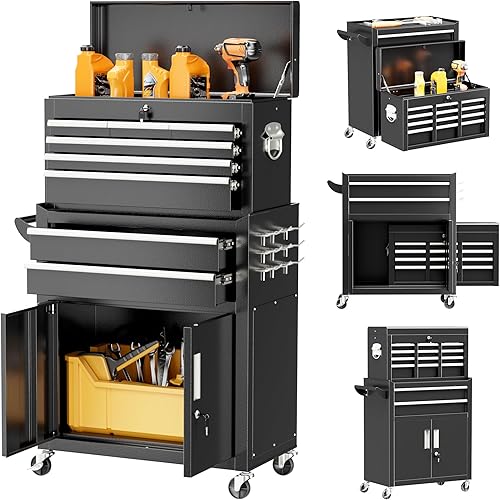
Superday 8-Drawer Rolling Tool Chest
Best for sorting tool collections - 5
 Check it
SUXXAN 3-Drawer Rolling Tool Chest with Pegboard
Best for tools within reach
The best tool chests for the money by storage need
Goplus offers the broadest fit for mixed garage storage, while the other picks address more specific needs. Start with how you use your tools, then choose the layout that supports that work.
SwellSatchel compared storage arrangements, dimensions, mobility and included features. The scores reflect each chest's fit for value-focused buyers, with product order kept consistent across this guide.
The comparison below is most useful for narrowing the shape and storage type. Overall cabinet dimensions don't establish usable drawer space or how much weight each drawer can hold.
| Product | Best for | Storage | Dimensions | Mobility | Our score |
|---|---|---|---|---|---|
| Goplus 5-Drawer Rolling Tool Chest | mixed garage tasks | 5 drawers, 2 trays, detachable top box | 23.5 L x 11 W x 40 H in | 4 universal wheels, 2 with brakes | 8.7 |
| Craftsman 3-Drawer Metal Portable Chest | small carry kits | 3 drawers | 20.6 L x 9 W x 13 H in | Flip-up handle for carrying | 8.3 |
| Tuffiom 5-Drawer Rolling Tool Chest | bulky-tool storage | 5 drawers and bottom cabinet | 11 D x 23 W x 40 H in | 4 wheels, 2 with brakes | 7.5 |
| Superday 8-Drawer Rolling Tool Chest | sorting tool collections | 8 drawers and bottom cabinet | 13 D x 24.2 W x 42.5 H in | 4 wheels, 2 with brakes | 7.0 |
| SUXXAN 3-Drawer Rolling Tool Chest with Pegboard | tools within reach | 3 drawers and top surface | 18.11 D x 30.31 W x 35.5 H in | 4 casters and push handle | 6.8 |
Goplus 5-Drawer Rolling Tool Chest
- 5 drawers and 2 trays
- Detachable top toolbox
- 23.5 L x 11 W x 40 H in
- Locking bar and 2 braked wheels
A detachable top box lets you take a task kit away from the rolling base. Drawers, trays and an adjustable lower shelf suit a mix of hand tools and larger items.
Pros
- Top toolbox works separately from the base
- Adjustable lower shelf and small-tool holders
- Main unit arrives pre-assembled
Cons
- Narrow cabinet needs careful tool-fit checks
- Wheels and racks need attaching
The Goplus suits someone building a central home for hand tools, small supplies and a few larger items. Its detachable top toolbox lets you keep a smaller task kit separate from tools that stay in the garage.
The lower shelf adjusts or comes out, so you can arrange that space around taller contents. Movable door hooks and six tool holes in the side handle give selected small tools their own places without filling a drawer.
That mix works well for household repairs and hobby projects where the tools change from one job to the next. Keep your general kit above and less-used or bulkier items below, rather than buying separate storage for each group.
Powder-coated steel and EVA drawer liners make cleaning and cushioning part of the package. The main unit arrives pre-assembled, though the wheels and racks still need attaching before use.
Skip it if long or deep tools dominate your collection. Its narrow body deserves a careful fit check, and a detachable upper box won't replace the working surface of a dedicated bench.
Craftsman 3-Drawer Metal Portable Chest
- Steel construction
- 3 drawers
- Flip-up carry handle
- 20.6 L x 9 W x 13 H in
This portable steel chest suits a small hand-tool kit that moves between work areas. Its empty weight and low maximum weight recommendation limit its appeal for frequent carrying.
Pros
- Flip-up handle for carrying
- Drawers separate small tool groups
- Sturdy latches keep the chest closed in transit
Cons
- Chest weighs 20.5 lb before adding tools
- Maximum weight recommendation is 5 lb
- Not water resistant
The Craftsman suits a small, deliberate kit that you carry to a nearby work area. Its portable steel format makes more sense than a rolling cabinet when you don't have a permanent garage parking spot.
Use the drawers to separate a few groups, such as fastening tools, measuring tools and small repair supplies. Sturdy latches keep the chest closed during transit, and the flip-up handle gives you a carrying grip.
The main trade-off is weight: the empty chest weighs 20.5 lb, before any tools go inside. Craftsman's maximum weight recommendation is 5 lb, so don't treat this as a way to carry a large collection just because the case is metal.
That limit makes it a specific choice for a modest kit, rather than the default recommendation for anyone who travels with tools. Plan the contents first and keep them within the stated recommendation.
Skip it for repeated long carries, wet storage or a growing power-tool kit. It's not water resistant, and a rolling option is more practical when you need to move a larger collection across one floor.
Tuffiom 5-Drawer Rolling Tool Chest
- 5 drawers and bottom cabinet
- Detachable top chest
- Adjustable, removable shelf
- 4 wheels, 2 with brakes
The adjustable lower cabinet suits tools that need open storage beneath smaller hand tools. A detachable top chest adds a separate storage option.
Pros
- Lower shelf adjusts or comes out
- Top chest has side handles for lifting
- Locking bars retain drawers and cabinet door during movement
Cons
- Lower shelf must come out before nesting the top chest
- Chest weighs 40 lb before adding tools
The Tuffiom suits a tool collection that needs open cabinet space beneath organized drawers. Choose it when larger items need an adjustable shelf rather than another narrow drawer.
Before buying, identify what will live below: a tool case, larger hand tool or grouped supplies. Measure those items together so the lower compartment has a clear job instead of becoming a pile of everything that doesn't fit elsewhere.
The detachable top chest has side handles for lifting. You can also nest it inside the lower cabinet for storage or transport, but the inner shelf must come out first.
That arrangement suits someone who occasionally needs to reduce the chest's stored height and can empty the lower section to do so. It isn't a convenient daily change if that cabinet is already full.
The side rack provides holes for selected small tools, while the powder-coated steel surface is easy to wipe clean. Skip this pick if you want every tool visible in a shallow drawer or need to keep the lower shelf loaded while nesting the upper box.
Superday 8-Drawer Rolling Tool Chest
- 8 sliding drawers
- Detachable top toolbox
- 13 D x 24.2 W x 42.5 H in
- 4 wheels, 2 with brakes
Different drawer sizes let you separate tools into more groups without relying on deep piles. Choose it when your collection needs several distinct storage zones.
Pros
- Two large, 3 medium and 3 small drawers
- EVA drawer padding
- Detachable top box and drawer-retaining levers
Cons
- Tallest cabinet in this group
- Wheels and brackets need installing
The Superday suits a collection with enough distinct tool groups to justify more separate drawers. It's a sensible choice when sockets, drivers, pliers, measuring tools and supplies would otherwise share crowded compartments.
Its eight drawers include two large, three medium and three small drawers. Assign each group a home before filling them, keeping the smallest items in divided sections rather than spreading them loosely across a larger drawer.
EVA padding cushions drawer contents, and the top toolbox separates from the rolling base. The main unit is pre-assembled, with wheels and brackets left to install.
This is the tallest cabinet in the group, so check the reach to the upper storage as well as clearance beneath shelves. A chest can fit a wall space yet still make frequently used tools awkward to retrieve.
Skip it if you only have a small starter kit or need room for bulky cases more than separate tool groups. Extra drawers help when they match your collection; they don't make a small cabinet suitable for every large tool.
SUXXAN 3-Drawer Rolling Tool Chest with Pegboard
- 3 pull-out drawers
- Side pegboard for compatible hooks
- 18.11 D x 30.31 W x 35.5 H in
- 4 casters
A side pegboard and usable top suit tools and supplies you want beside the work area. Allow enough room to reach the side panel as well as the drawers.
Pros
- Side pegboard keeps selected tools visible
- Push handle for repositioning
- Usable top beside the work area
Cons
- Assembly requires frame and drawer alignment
- Hooks and pictured accessories are not included unless stated
- Widest and deepest cabinet in this group
The SUXXAN suits a work area where visible hanging tools and nearby supplies matter more than a tall stack of drawers. Its side pegboard gives compatible hooks a place to hold selected small tools.
Keep the side panel facing an accessible aisle, rather than pushing it against a wall. Otherwise, you're giving up the feature that makes this cabinet different from the other picks.
The usable top can hold items needed during a task, while three pull-out drawers separate the contents below. Treat that surface as convenient staging space; don't assume it's suitable for mounting a vise or supporting heavy work.
At about 30.31 in wide and 18.11 in deep, it needs more floor area than the other cabinets here. Its lower height may suit your reach, but it doesn't make the footprint smaller.
Assembly requires aligning the frame and drawers before final tightening. Skip it for a narrow wall gap or if you need many separate drawers, and plan for compatible hooks because pictured tools and accessories aren't included unless stated.
How to choose a tool chest that earns its space
Match the chest to your tools and movement needs before comparing extras. A useful drawer layout and clear access matter more than storage features you'll rarely use.
Does the best tool chest for your money fit your garage?
Measure the parking spot, drawer-opening area and route into the room. Include the handle, side storage and enough standing room to reach into an open drawer without twisting around a vehicle.
Mark the footprint on the floor with tape or cardboard. Then open nearby doors and walk through the space with the garage arranged as it normally is.
Check your largest tools separately, including their handles and cases. Exterior dimensions include the cabinet structure, so don't assume a tool nearly as long as the chest will fit inside a drawer.
Our guide to tool chest sizes helps you compare cabinet shapes. A wide, low unit and a narrow, tall unit can create very different access problems despite holding similar kinds of tools.
Do you need a rolling cabinet or a portable toolbox?
Choose a rolling cabinet for tools that stay on one floor and move between nearby work positions. Choose a portable chest for a small kit that must leave that area.
Think through the whole trip, including door thresholds, steps and storage at the destination. Workshop casters don't turn a steel cabinet into a practical choice for stairs or regular vehicle loading.
A detachable top box can keep a task kit separate, but consider the weight of its contents before lifting it. The ability to separate a chest is useful only when the smaller section remains manageable.
If your main need is transporting stacked boxes rather than opening drawers beside a bench, compare our best rolling tool boxes.
Which drawer layout gives you the best value?
Lay out your tools in the groups you want to store together. That shows whether you need shallow rows of hand tools, deeper spaces for cases or a lower cabinet for awkward shapes.
Keep frequently used tools in a single visible layer where possible. A drawer that holds everything in a deep pile saves floor space but adds searching and rearranging to each job.
Leave some room within useful categories rather than buying empty drawers with no purpose. A little space beside your current pliers or drivers is easier to use than one large overflow drawer.
Choose dividers after deciding where the tools belong. Our drawer divider guide explains ways to separate small groups without wasting the drawer's usable space.
Which load limits matter before buying?
Check drawer, shelf and whole-cabinet limits separately before planning a heavy load. A total capacity doesn't tell you how much one drawer, caster or removable box can safely support.
Distribute dense tools across suitable lower storage areas, following the chest's instructions. Don't put your entire socket collection in one upper drawer simply because it closes.
Empty weight also affects assembly and relocation. Our guide to how heavy a loaded tool chest can be helps you account for the tools as well as the cabinet.
Are locks, brakes and liners worth paying for?
Brakes help hold a wheeled cabinet in place during use, while retaining bars or levers keep drawers and doors closed during movement. Those are different jobs, and neither establishes resistance to theft.
A lock can limit casual access, but valuable tools still need a suitable storage location. Don't choose a chest's security based only on the presence of a key or bar.
Liners are useful where tools slide or knock together. Our tool chest drawer liner guide covers fit, so you can add cushioning without bunching material around drawer edges.
How should you set up a new tool chest?
Assemble and check the empty chest before loading tools. It's easier to correct wheel attachment, drawer alignment or missing hardware while the cabinet is light and accessible.
Inspect and assemble in the final work area
Unpack on a clear floor and keep the hardware grouped by assembly step. Check that the cabinet, drawers, wheels and required fasteners are present before discarding the packaging.
Follow the included instructions for supporting or turning the cabinet during wheel installation. Get help where needed, and don't use drawers or a removable toolbox as lifting handles.
For an assembly-required cabinet, align the frame and drawers before final tightening. Uneven alignment can make access awkward even when every fastener appears secure.
Check movement before adding weight
Move the empty chest over its intended route and check that each drawer opens and closes without catching. Engage any wheel brakes and drawer-retaining parts as directed.
Stop if a wheel binds, the cabinet rocks or a drawer won't close correctly. Adding tools won't solve an assembly problem, and it makes the next adjustment harder.
Load tools by reach and weight
Place heavier contents low, then assign frequently used tools to comfortable reach. Keep just one drawer open at a time, and never use an open drawer as a step or seat.
Label broad categories only after trying the arrangement during normal work. Our guide to organizing a tool chest helps you build a layout around the tools you reach for most.
How do you keep a tool chest useful for longer?
Keep the chest dry, the wheels clear and the drawers easy to close. Small checks catch problems before dirt, loose hardware or poor organization makes the cabinet harder to use.
Wipe moisture and residue from tools before putting them away. Powder coating helps cover steel surfaces, but it isn't a reason to leave wet tools or damp rags inside a closed drawer.
Lift removable liners occasionally and clean underneath them. Let the drawer and liner dry fully before refitting, and replace material that bunches or interferes with closing.
Remove thread, chips and other debris from caster areas, following the care instructions. Check accessible wheel and handle fasteners periodically, especially if the chest moves often.
Before rolling, close the drawers and cabinet door, secure retaining parts and clear loose items from the top. Move slowly on a suitable level floor rather than forcing the wheels over an obstacle.
Don't add lubricant to slides or casters without checking the instructions. Use the recommended care method so you don't create a sticky surface that holds more dust.
Which buying mistakes waste the most money?
Buying the wrong storage shape is the biggest avoidable mistake. Confirm fit and daily access before choosing by drawer count, cabinet height or included accessories.
Choosing more drawers without checking their purpose
A collection of large tool cases won't become easier to store just because a cabinet has several small drawers. Assign your main tool groups first, then choose enough suitable spaces for them.
The reverse also matters: open cabinet storage can hide small tools in stacked boxes. If most of your work uses loose hand tools, accessible drawers may serve you better.
Planning only for the chest's parked size
A cabinet that fits between a shelf and a vehicle may still block the aisle when opened. Include your body position and the full drawer travel in the plan.
Side-mounted tools need clearance too. Leave enough space to remove a hanging tool without bumping the wall or neighboring storage.
Treating portability as a handle feature
A handle gives you a grip; the loaded weight determines whether carrying is practical. Choose the kit you need to move before choosing its case.
For occasional repairs elsewhere in the house, a small task kit may be easier to manage than moving your whole collection. Keep the main storage near the work it supports.
Spending the whole budget on the cabinet
Allow for dividers, suitable hooks or other organizers that your chosen layout needs. Included liners can help, but they don't separate sockets, bits or small hardware by themselves.
Start with simple organizers for the tools you already have. Avoid filling every drawer with fitted accessories before you've settled on where each tool belongs.
Which tool chest is the best value for your setup?
The best tool chest for the money is the one that removes your main storage problem. Choose from these picks by the job the chest needs to do, then confirm tool fit and access before ordering.
- Choose Goplus for mixed garage storage and a task box that can separate from the rolling base.
- Choose Craftsman for a small carry kit within its weight recommendation, provided the empty chest is manageable for you.
- Choose Tuffiom when the lower cabinet and adjustable shelf have a clear role for larger items.
- Choose Superday when several tool groups need their own drawers.
- Choose SUXXAN when accessible side storage and a nearby top surface suit your work area.
If your largest tools won't fit these compact layouts, choose a different cabinet size rather than forcing the collection into smaller spaces. For help settling the storage type first, read our tool chest vs. tool box guide.
Related tool chest guides
Start with the guide that resolves your remaining fit or layout question. These pages cover broader rolling options, garage planning, dimensions and the top pick in more detail.
- Best rolling tool chests
- How to choose a tool chest for your garage
- Tool chest sizes for a home garage
- Goplus 5-Drawer Rolling Tool Chest review
Our top 3 picks at a glance
-
1
-
2
-
3
Frequently asked questions
What makes a tool chest a good value?
A good-value tool chest fits your current tools, leaves room for a few additions and works in your available space. Compare usable drawer layout, cabinet access and movement needs before choosing extra features, since a larger chest offers little benefit if you can't reach its contents easily.
Is a rolling tool chest better than a portable chest?
A rolling chest is better for tools that stay on one garage or workshop floor, while a portable chest suits a small kit carried between work areas. Check empty weight and carrying limits before choosing a portable model, because a handle doesn't make a loaded steel chest light.
How much space should I leave for a tool chest?
Leave enough space for the cabinet, fully opened drawers and a comfortable standing position in front of them. Include handles, hanging tools and the route past parked vehicles or doors in your measurements; our tool chest size guide explains how to plan the full working area.
Do tool chests need liners or dividers?
Liners help cushion tools and reduce sliding, while dividers keep small groups from mixing when drawers move. Add them where they solve a storage problem, and measure the usable drawer interior before cutting or buying anything; our tool chest drawer liner guide covers fit and material choices.