Milwaukee Packout 22-Inch Rolling Tool Box Review: Worth It? (October 2026)
The Milwaukee Packout rolling tool box is a strong choice for Packout users who carry bulky tools. Choose it for a compatible rolling base, and plan separate storage for small parts because an interior tray isn't included.
On this page (8 sections)
- What does the Milwaukee Packout rolling tool box offer?
- Will it fit your vehicle and storage space?
- How should you organize the open compartment?
- How do the alternatives differ?
- How should you set up and move a Packout stack?
- What care keeps the box useful?
- Which buying mistakes should you avoid?
- Should you choose the Milwaukee Packout rolling tool box?
The Milwaukee Packout rolling tool box is a strong choice for Packout users who need to move bulky tools with a compatible stack. Its main trade-off is access: the open base compartment suits larger gear, but reaching it means removing boxes stacked above the lid.
SwellSatchel gives it a score of 9 for its system fit, protective construction and transport features. Buy it because the Packout layout suits your work, then choose organizers around the tools you carry.
What does the Milwaukee Packout rolling tool box offer?
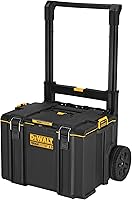
The Milwaukee combines a large open compartment with a Packout-compatible rolling base. It suits buyers who want to transport tools together and separate the boxes at the work area.
Milwaukee Packout 22-Inch Rolling Tool Box

- Packout-compatible rolling base
- 9 in all-terrain wheels
- IP65-rated weather seal
- Optional interior tray
A rolling base for buyers who want to move bulky tools with compatible Packout boxes. Its open compartment needs separate containers or an optional tray for small tools and parts.
Pros
- Compatible with Packout modular storage products
- Industrial-grade extension handle
- Metal-reinforced corners and locking point
- IP65-rated weather seal
Cons
- Interior organizer tray isn't included
- Access to the main compartment requires removing boxes stacked above it
The body uses impact-resistant polymers, with metal-reinforced corners and a locking point. Heavy-duty latches secure the lid, while an IP65-rated weather seal helps protect the contents from dust and water.
Its industrial-grade extension handle and 9 in all-terrain wheels support transport over uneven surfaces. Wheel size helps with small obstacles, but the route, load and balance still determine how manageable a stack feels.
Who should buy the Milwaukee Packout rolling tool box?
Existing Packout users carrying bulky tools are the clearest match. The rolling base lets you keep using compatible boxes rather than starting a second storage system.
It also makes sense for someone building a kit around a few larger tools, with smaller items kept in separate cases. Think of the base as transport and bulk storage, rather than a place to sort every screwdriver and fastener.
Skip it if you need frequent access to bottom-layer tools while the tower stays assembled. A drawer-based system or a traditional chest may suit that workflow better.
Buyers who mainly carry a small hand-tool kit should also consider whether they need a rolling base at all. A larger box adds handling weight even when much of its compartment is empty.
Will it fit your vehicle and storage space?
Measure the cargo opening, storage spot and loading route before choosing the box. The 22-inch name alone doesn't describe the space you'll need.
| Detail | Milwaukee Packout 22-Inch Rolling Tool Box |
|---|---|
| Exterior dimensions, L x W x H | 22.1 x 18.9 x 25.6 in |
| Empty weight | 23.4 lb |
| Compartments | 1 |
| Maximum weight recommendation | 113 kg |
| Interior organizer tray | Optional, not included |
Check the narrowest part of a vehicle opening, including trim, wheel wells and any shelf above the cargo floor. Leave working space to grip the box instead of planning a fit that depends on squeezing it through.
Exterior dimensions also aren't usable interior measurements. For an awkward tool or fitted case, confirm its fit before choosing inserts or planning the rest of your load.
Allow room to open the lid where you normally unload. A box that fits beneath a garage shelf may still need pulling out before you can reach its contents.
The empty weight matters most when loading into a vehicle or crossing stairs. Add your tools and organizers to that starting weight, then decide whether you should split the load into separate boxes.
Use our Milwaukee Packout dimensions guide to plan the other boxes in your stack. Measure the whole arrangement rather than assuming a base that fits guarantees the tower will fit.
How should you organize the open compartment?
Keep bulky tools in the base and contain small items in removable groups. Loose bits, sockets and fittings make a deep compartment harder to use and can hide beneath larger tools.
Start by laying out one typical job kit on a bench. Group tools by task, then decide which items belong in the base and which deserve their own upper box.
An optional tray helps when you want a shallow layer above larger gear. Small cases can also work, provided you can lift them out without catching on handles, cords or tools beneath them.
Keep dense items low and distribute them across the compartment. Avoid placing a heavy tool where it can shift against a smaller case or prevent the lid from closing freely.
Put frequently used tools where you'll reach them first. If you need a meter or screwdriver every few minutes, burying it beneath a charger and drill defeats the purpose of organized storage.
For a mixed garage setup, our tool chest drawer dividers guide covers organizing the tools that stay in drawers. You don't need to put your entire collection into the rolling kit.
How do the alternatives differ?
Choose an alternative for its storage system or work pattern, rather than a single larger number. A complete tower, an included tray and a removable handle solve different problems.
| Product | Strongest buying reason | Main trade-off |
|---|---|---|
| Milwaukee Packout 22-Inch Rolling Tool Box | A rolling base for compatible Packout boxes | Open base needs planned organization |
| Craftsman VERSASTACK XL 4-Piece Rolling Tower | Several storage units from the start | Complete tower needs more vertical space |
| DeWalt ToughSystem 2.0 Mobile Storage | ToughSystem compatibility with an inner tray | Longer exterior footprint |
| Klein MODbox Rolling Tool Box | Large wheels and a removable handle | Higher empty weight than Milwaukee |
If you're starting from scratch, think about the boxes you'll add later. Our guide to choosing a modular rolling tool box system helps match the system to your storage and transport needs.
Craftsman VERSASTACK XL 4-Piece Rolling Tower
Choose Craftsman for a home project kit that needs separate storage units immediately. The set includes a suitcase, deep toolbox, rolling unit and adaptor, so you can divide tools without first building a tower piece by piece.
Automatic drop-and-lock stacking and one-touch release suit a setup you regularly assemble and break apart. The included adaptor connects to other VERSASTACK boxes, while the body offers water and dust resistance.
Skip this tower if you mainly need one open bin for bulky gear or already own Packout boxes. At 33.9 lb and 33.3 in tall, the complete system also needs a different loading plan from a single rolling base.
DeWalt ToughSystem 2.0 Mobile Storage
Choose DeWalt if you own ToughSystem boxes or want a removable inner tray included. It works with earlier ToughSystem products, and its auto-connect side latches allow one-handed operation.
The box has IP65 dust and water resistance, plus two-piece metal front latches. Its 38.81 in exterior length deserves careful attention if your cargo space is short.
Skip it when Packout compatibility is the reason you're shopping. Also, DeWalt's claim of 20% more storage applies to a tower with DWST08165 and DWST08300, so don't treat it as a standalone-box comparison.
Our Milwaukee Packout vs DeWalt ToughSystem comparison covers the system choice in more detail.
Klein MODbox Rolling Tool Box
Choose Klein when rough ground and a removable handle are priorities in a MODbox setup. Its lid also provides a V-groove and molded ruler for on-site cutting and measuring tasks.
Included dividers give you another way to separate contents, and IP65 sealing adds dust and water protection. The removable handle is worth considering when planning how the box will travel in a vehicle.
Skip it if you often lift the empty box or have little spare width. It weighs 30.4 lb and measures 20.7 in wide, so confirm that its transport features justify the extra bulk for your route.
For more choices beyond these systems, see our Milwaukee Packout alternatives.
How should you set up and move a Packout stack?
Build the stack around balance, access and manageable lifting. The load limit is a ceiling, not a target for every trip.
- Start with a realistic load. Pack the tools for a normal job before adding rarely used extras.
- Keep the base balanced. Place dense tools low, with their weight spread rather than gathered at one side.
- Arrange for access. Put frequent-use items above the base so you aren't dismantling the tower for every small task.
- Check connections and latches. Make sure boxes are fully connected and lids are closed before moving.
- Plan vehicle loading separately. Break the stack into manageable units when lifting the complete load would be awkward.
Our guide explains how to separate and lock Milwaukee Packout boxes. Learn the release steps before loading the system with tools.
On uneven ground, slow down before changes in level and keep a controlled grip on the handle. Don't assume all-terrain wheels make a tall stack stable across every rut, curb or side slope.
For stairs, plan how you'll carry separate units and whether you need help. A rolling setup can reduce carrying along a path, but it doesn't remove lifting from the job.
What care keeps the box useful?
Keep dirt out of the connections and seal, and put tools away dry. A protected compartment still needs clean contact surfaces and sensible storage.
Brush or wipe away grit around the lid seal and stacking connections before closing or reconnecting boxes. Trapped debris can interfere with seating and make the next connection harder.
Check wheels, handle movement and latches as part of routine packing. Address damage or a sticking part before taking a heavy load away from the garage.
Dry damp tools and let moisture escape before closing the box for longer storage. Water resistance protects against exposure, but it doesn't dry wet contents.
Use the lid's locking point as part of your storage plan, while securing the box separately during vehicle transport. Connecting boxes together doesn't restrain the stack inside a moving vehicle.
Which buying mistakes should you avoid?
Avoid choosing by capacity alone or buying organizers before planning access. The right box needs to fit your daily route and make your tools easier to reach.
- Treating exterior size as interior space: Allow for the shape of the compartment and the space needed to remove tools.
- Putting every tool in the base: Heavy, crowded storage makes lifting harder and hides frequently used items.
- Building too tall: A tower must fit your vehicle and remain manageable along the route.
- Assuming brands connect: These products belong to different modular systems; don't plan a mixed stack without confirmed compatibility.
- Confusing weather protection with dry storage: Close the box properly and avoid putting wet tools away.
- Buying a mobile system for stationary work: If tools rarely leave the garage, drawers may give you easier access.
Our guide to organizing a tool chest can help you decide which tools should stay at the bench and which belong in a travel kit.
Should you choose the Milwaukee Packout rolling tool box?
Choose the Milwaukee Packout rolling tool box if Packout compatibility and bulk-tool transport match your work. Before buying, map one job kit into the compartment and decide which tools need separate, easy-to-reach storage.
Pick Craftsman when you want a ready-made tower for home projects. Choose DeWalt for an existing ToughSystem setup, or Klein when its wheel and handle design better suit your transport route.
If your main goal is reaching tools without removing upper boxes, reconsider the storage format. Our rolling tool chests and tool boxes guide helps you choose between a mobile modular kit and a chest that stays near the work.
Frequently asked questions
Does the Milwaukee Packout rolling tool box include an organizer tray?
No, an interior organizer tray isn't included with this rolling tool box; you can add an optional tray or use separate small cases to keep bits, fittings and hand tools apart. Choose containers around your actual tools, and leave enough room to lift them out without unpacking the whole compartment.
How big is the Milwaukee Packout 22-Inch Rolling Tool Box?
The box measures 22.1 x 18.9 x 25.6 in and weighs 23.4 lb empty; measure your vehicle opening as well as the space inside it, then allow room to open the lid and use the handle. Exterior measurements don't tell you whether a particular tool will fit inside.
Can the Milwaukee Packout rolling tool box connect to other Packout boxes?
Yes, this rolling tool box is compatible with Packout modular storage products; plan the stack around access: tools used often belong in an easy-to-reach upper box, while bulky tools can go in the rolling base. Check each connection before moving, and separate the stack when lifting individual boxes is easier.
Is the Milwaukee Packout rolling tool box water resistant?
Yes, it has an IP65-rated weather seal for dust and water protection; that doesn't make it suitable for submersion or storing wet tools in a closed compartment. Keep the seal clean, close the latches fully and dry damp tools before putting them away for longer storage.