Milwaukee Packout vs Klein MODbox: Which Is Better? (October 2026)
For Milwaukee Packout vs Klein MODbox, choose Packout for frequent lifting and existing Packout boxes. Choose standard MODbox for divided storage and lid utility, or the drawer MODbox for tool access without unstacking.
On this page (10 sections)
- Milwaukee Packout vs Klein MODbox: which differences matter?
- Who should buy Packout, standard MODbox or drawer MODbox?
- Should existing boxes decide which system you choose?
- Is drawer access worth the extra weight?
- How should you plan the loaded weight?
- What should you measure before buying?
- How should you set up the box for daily work?
- How do lid features and weather protection affect use?
- What care habits and buying mistakes matter most?
- Milwaukee Packout vs Klein MODbox: what is the final decision?
For Milwaukee Packout vs Klein MODbox, choose Packout if you lift your rolling box often or already own Packout storage. Choose standard MODbox for divided storage and lid utility, or the drawer MODbox for access without unstacking.
The key difference is how you move and reach your tools. A lighter base helps during vehicle loading, while drawers can save repeated rearranging once your station is parked.
Start with your normal workday: what goes into the vehicle, what rolls to the work area, and which tools you reach for first.
 Best for frequent vehicle loading
Milwaukee Packout 22-Inch Rolling Tool Box
Milwaukee Packout vs Klein MODbox: which differences matter?
Empty weight, storage layout and system fit should drive this choice. The standard rolling boxes have nearly equal capacity figures, so neither earns a meaningful advantage from that number alone.
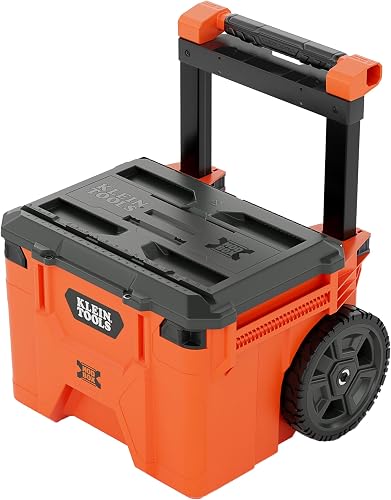
| Feature | Milwaukee Packout 22-Inch Rolling Tool Box | Klein MODbox Rolling Tool Box |
|---|---|---|
| Empty weight | 23.4 lb | 30.4 lb |
| Dimensions (L x W x H) | 22.1 x 18.9 x 25.6 in | 22.7 x 20.7 x 27 in |
| Capacity guidance | 113 kg maximum weight recommendation | 250 lb capacity |
| Wheels | 9-inch all-terrain wheels | 10-inch solid rubber wheels |
| Handle | Industrial grade extension handle | Removable telescoping handle |
| Interior storage | 1 compartment; tray optional | Dividers included |
| Weather protection | IP65 rated weather seal | IP65 protection |
| Modular fit | Packout modular storage products | MODbox modular system |
Milwaukee's capacity figure converts to about 249 lb. A difference of about 1 lb gives you no useful reason to change systems or accept a layout that slows your work.
Exterior dimensions also don't tell you which tools will fit inside. Make a list of your largest items, including their cases, and confirm interior clearance before choosing a box around them.
Milwaukee Packout vs Klein MODbox for daily transport
Packout starts 7 lb lighter, which matters most when the wheels aren't carrying the load. Think about lifting into a vehicle, moving over steps and putting the empty box away.
Standard MODbox brings a removable handle and larger wheels to the comparison. Those features suit transport planning, but wheel diameter alone doesn't establish easier movement on every surface.
Walk the route from parking to your work area before buying. Tight turns, gravel, thresholds and stairs create different demands, and a rolling box still needs a workable plan wherever rolling stops.
Who should buy Packout, standard MODbox or drawer MODbox?
Buy for the routine you repeat most often, rather than an occasional task. Each option solves a different storage problem.
Packout suits mobile repair work, a changing kit and frequent vehicle loading. It also makes sense if compatible Milwaukee boxes already hold the accessories you want to carry above the base.
Skip this Packout model if you expect included small-tool organization or need to reach the bottom compartment while other boxes remain stacked above it. Its main storage space is an open compartment.
Standard MODbox suits a buyer starting a Klein station who wants to divide the main storage area. Its lid features are useful when brief measuring or material-support tasks form part of the workday.
Skip standard MODbox if you need front access to tools all day. Dividers improve separation, but they don't change a top-opening box into a drawer unit.
The drawer MODbox suits a rolling station that stays near the job while you switch between tools and accessories. Its strongest reason to buy is access, especially when upper modules would otherwise need moving.
Skip the drawer version if you repeatedly carry your storage upstairs or lift it into a vehicle alone. It weighs 51.3 lb empty, before you add any tools.
Should existing boxes decide which system you choose?
Stay with your current system when its storage already works for you. Switching the rolling base may also mean replacing the upper boxes that make your kit useful.
Packout connects with Milwaukee Packout modular storage products. MODbox belongs to Klein's modular system, so plan a stack within the chosen family unless you have confirmed another connection for the exact components.
Count the boxes you use each week before deciding. A set of useful organizers matters more than a stack of rarely opened containers that happen to match.
Starting from scratch gives you more freedom. Plan the base, daily-access storage and small-parts storage together, then buy only the modules needed for that kit.
Our guide to Milwaukee Packout dimensions and sizes helps with planning a Milwaukee stack. For connection and release steps, see how to separate and lock Milwaukee Packout boxes.
Is drawer access worth the extra weight?
Choose drawers when repeated access saves you from removing upper boxes. Choose an open rolling box when carrying bulky equipment matters more than keeping several tool groups separately reachable.
Klein's drawer model has a large lower drawer for bulky power tools and 2 compact top drawers for accessories, batteries and smaller items. Included dividers help split those spaces into useful groups.
Its ball bearing slides fully extend, and a locking bar secures the drawers during transport. The bar stores in the base when you're using the station.
Before choosing it, write down the tools you reach for during a typical task. If those items would otherwise sit under several modules, front access offers a clear benefit.
If you usually remove one large tool at the start and return it at the end, drawers may add weight without solving much. A main compartment can be the simpler fit for that routine.
Drawer space also needs planning by tool shape. Our guide to tool chest drawer dividers and setup explains how to create sections without wasting useful room.
How should you plan the loaded weight?
Plan for the complete load you must move, not just the box's capacity. Add the empty base, tools, upper modules and any supplies that travel with them.
A capacity figure describes load guidance; it doesn't tell you what you can comfortably lift. A box that rolls well on level ground may still be awkward at a high vehicle opening.
Separate frequently carried supplies from tools that can stay in the vehicle. Avoid turning the rolling base into permanent storage for items you rarely need at the work area.
Keep dense items low and spread the load so one side isn't much heavier. Put light accessories higher, while keeping the stack within the instructions for every connected component.
Decide where you'll split the stack before loading day. Smaller loads can make vehicle transfers more manageable, provided you follow the handling instructions for each box.
For a fuller packing calculation, see how heavy a rolling tool chest gets when loaded. Include spare batteries and fasteners in that total, since small items add up.
What should you measure before buying?
Measure the vehicle opening, storage spot and access space, then check the route between them. Fitting the box through a door is only part of the job.
Use the dimensions in the comparison table for the standard boxes. The drawer MODbox measures 23.6 x 21.2 x 27 in, so it also needs its own footprint check.
Mark that footprint with tape on the garage floor. Leave space to stand behind the handle, turn the box and reach its connection points.
For top-opening boxes, check overhead clearance and where removed upper modules will sit. For the drawer model, keep enough room in front to extend the drawers and reach the contents.
Check your vehicle opening at its narrowest point, including trim and wheel wells. Don't assume a removable handle guarantees a fit; verify the actual loading arrangement.
Our tool chest size guide helps turn measurements into a usable storage plan. Measure upper modules separately rather than assuming the base dimensions describe the full stack.
How should you set up the box for daily work?
Organize by access order before filling every space. The tools you need first should be reachable without unpacking tools you won't use until later.
Start with your largest equipment and check how it sits when the lid closes or drawer shuts. Avoid a layout that presses accessories against the closure or leaves sharp edges rubbing neighboring tools.
In Packout's open compartment, use suitable smaller containers to keep loose fasteners and bits together. If you want a separate upper layer, account for the optional interior tray when planning the load.
In standard MODbox, arrange the included dividers around tool groups you actually carry. Leave enough room to lift each item out without removing the entire section.
With the drawer model, group items by task or size so the drawer labels match your routine. Keep frequently used accessories easy to spot rather than spreading them across several drawers.
Leave a small return space for tools you're using during the job. Packing every corner tightly makes it harder to put equipment away quickly and encourages loose items on top.
Our guide to how to organize a tool chest offers more ways to group a mixed kit. Apply the same access-first approach even when you're working with a single compartment.
How do lid features and weather protection affect use?
Standard MODbox adds lid utility; both standard boxes provide IP65 protection. Choose the lid features for tasks you'll actually perform, rather than as a substitute for a suitable work surface.
Klein's V-groove and molded ruler support cutting and measuring tasks on-site. Set the box on stable ground and use suitable material support and clamping for the tool and task.
Keep loose parts off the lid before opening it. A useful work surface can become inconvenient storage if every tool change starts with clearing it.
For either standard box, keep the seal area free of grit and close the lid fully. Water resistance doesn't make the box suitable for submersion or mean wet tools should stay sealed inside.
Don't transfer the standard MODbox's protection specification to the drawer model. If exposure is central to your decision, confirm protection for that exact model before choosing it.
What care habits and buying mistakes matter most?
Keep closures clean, tools dry and the transport route realistic. These habits protect the usefulness of the system after the initial setup.
Brush debris away from latches, connection points and seal surfaces before closing the box. Inspect wheels and handles for trapped material or damage, especially after moving through dirt or construction waste.
Let damp tools and storage spaces dry before closing them for a long period. Follow the manufacturer's care instructions before applying cleaners or lubricants to seals, slides or connection parts.
Secure drawer storage with its transport locking bar before moving it. On a parked station, work with one loaded drawer open at a time and keep the box on level ground.
Avoid these common buying mistakes:
- Choosing by capacity alone: the standard boxes are too close on capacity for that to settle the choice.
- Buying the whole stack at once: start with the kit you use and add storage when a clear need appears.
- Ignoring access: a bottom compartment loses convenience when you repeatedly remove boxes to reach it.
- Packing to the limit: leave enough room to remove tools and close everything without force.
- Forgetting the loading step: a route that rolls easily can still end at a difficult lift.
If you're still deciding between a modular base and other rolling storage, our rolling tool chest and tool box guide explains the broader choices.
Milwaukee Packout vs Klein MODbox: what is the final decision?
Pick the box that removes a repeated problem from your workday. In the Milwaukee Packout vs Klein MODbox decision, lifting favors Packout, divided top-opening storage favors standard MODbox, and repeated access favors drawer MODbox.
Choose Packout when vehicle transfers are frequent or your existing Milwaukee modules already suit your tools. Don't switch away from a useful system just for a small capacity difference.
Choose standard MODbox when you want to build a Klein station around included dividers and occasional lid tasks. Choose the drawer version when removing upper boxes would interrupt work often enough to justify its greater weight.
If neither layout fits your routine, use our guide to choosing a modular rolling tool box system to plan the storage before choosing the brand.
For specific alternatives, compare Milwaukee Packout vs DeWalt ToughSystem or Milwaukee Packout vs Craftsman VERSASTACK around the same loading and access needs.
Frequently asked questions
Is Milwaukee Packout or Klein MODbox better?
Packout is better for frequent lifting and buyers who already use Packout boxes; standard Klein MODbox suits a mobile station with divided storage and useful lid features, while the drawer model suits repeated tool access. Choose around your daily loading and access routine rather than the small difference in capacity figures.
Do Milwaukee Packout and Klein MODbox boxes connect to each other?
Plan on using each rolling base with its own modular system: Packout connects with Packout storage, and MODbox connects within Klein's system. Don't assume the brands connect directly because their boxes look similar; confirm any proposed connection for the exact components before building a mixed stack.
Which rolling toolbox has the higher capacity?
The standard Klein MODbox has a 250 lb capacity, while Milwaukee gives a 113 kg maximum weight recommendation, about 249 lb; that difference shouldn't decide your choice. Check the load instructions for every component in your stack, and don't treat a box's capacity as a comfortable lifting weight.
Which is easier to organize, Packout or MODbox?
The drawer MODbox is the clearest choice for separating tools you need throughout the day; standard MODbox includes dividers, while Packout has one main compartment and an optional tray. An open box can still suit bulky equipment better, so choose around tool shape and access frequency.
Does the Milwaukee Packout rolling box include an organizer tray?
No, this Milwaukee Packout rolling box does not include an interior organizer tray. Add a compatible tray if you want a separate layer for smaller tools, or use suitable containers for loose parts; plan that organization before filling the main compartment so daily essentials don't disappear beneath larger equipment.